What Is a Cease and Desist Letter? Understanding Legal Rights
Discover what is a cease and desist letter and how it functions as a crucial tool for addressing legal disputes and enforcing rights effectively.
A cease and desist letter is a formal written document that demands an individual or organization stop engaging in allegedly unlawful or harmful activities. This legal tool serves as a warning before potential litigation, giving the recipient an opportunity to halt their actions and avoid costly legal proceedings.
What is a Cease and Desist Letter
Cease and desist letters function as official notifications that someone's actions are causing harm or violating your rights. These letters outline the specific problematic behavior, explain why it's unlawful or harmful, and demand immediate cessation of the activity. While not legally binding court orders, they carry significant weight as formal legal communications that can serve as evidence in future litigation.

Common Situations for Sending Cease and Desist Letters
Intellectual Property Violations
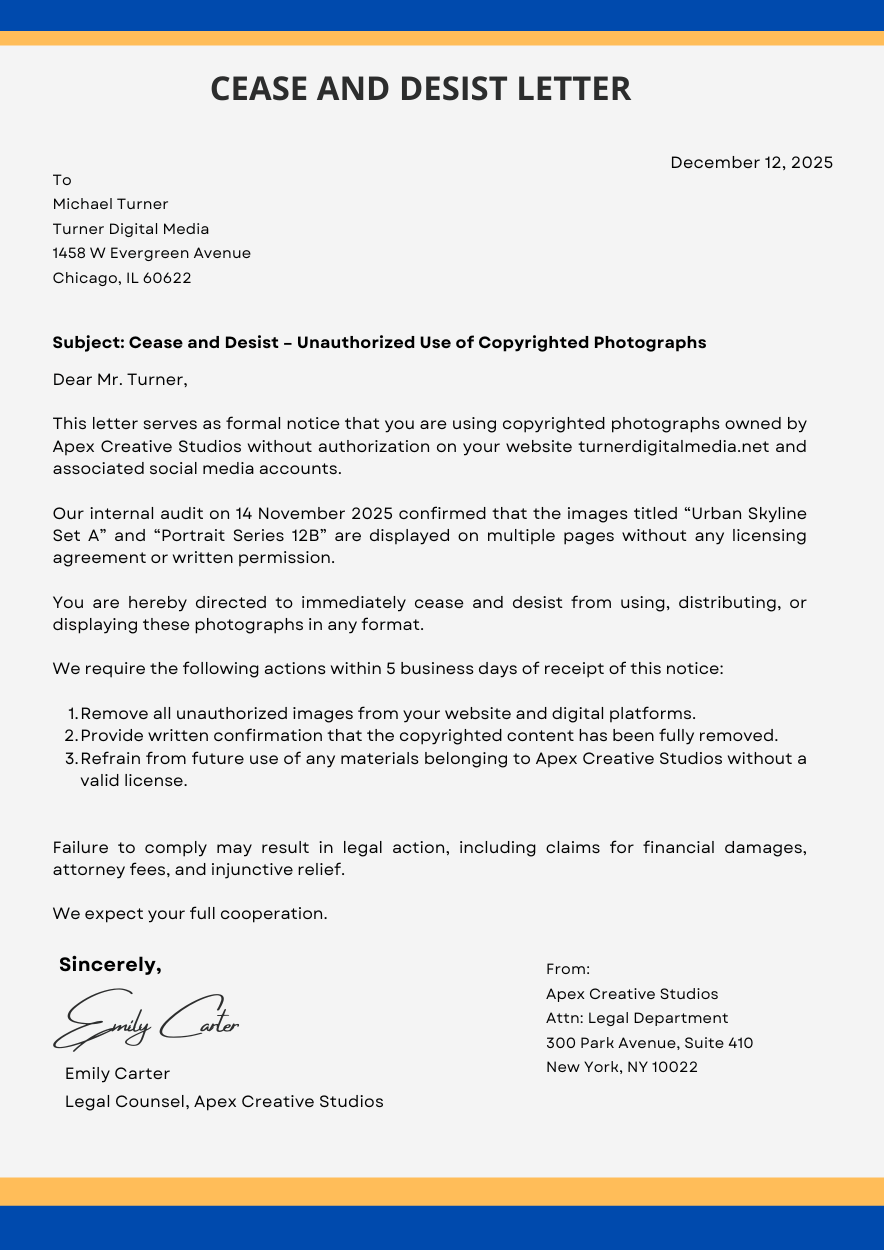
One of the most frequent uses involves protecting intellectual property rights. This includes situations where someone is using your trademark without permission, copying your copyrighted material, or infringing on your patent rights. Businesses often send these letters when competitors use confusingly similar branding or when content creators discover their work being reproduced without authorization.
Harassment and Defamation
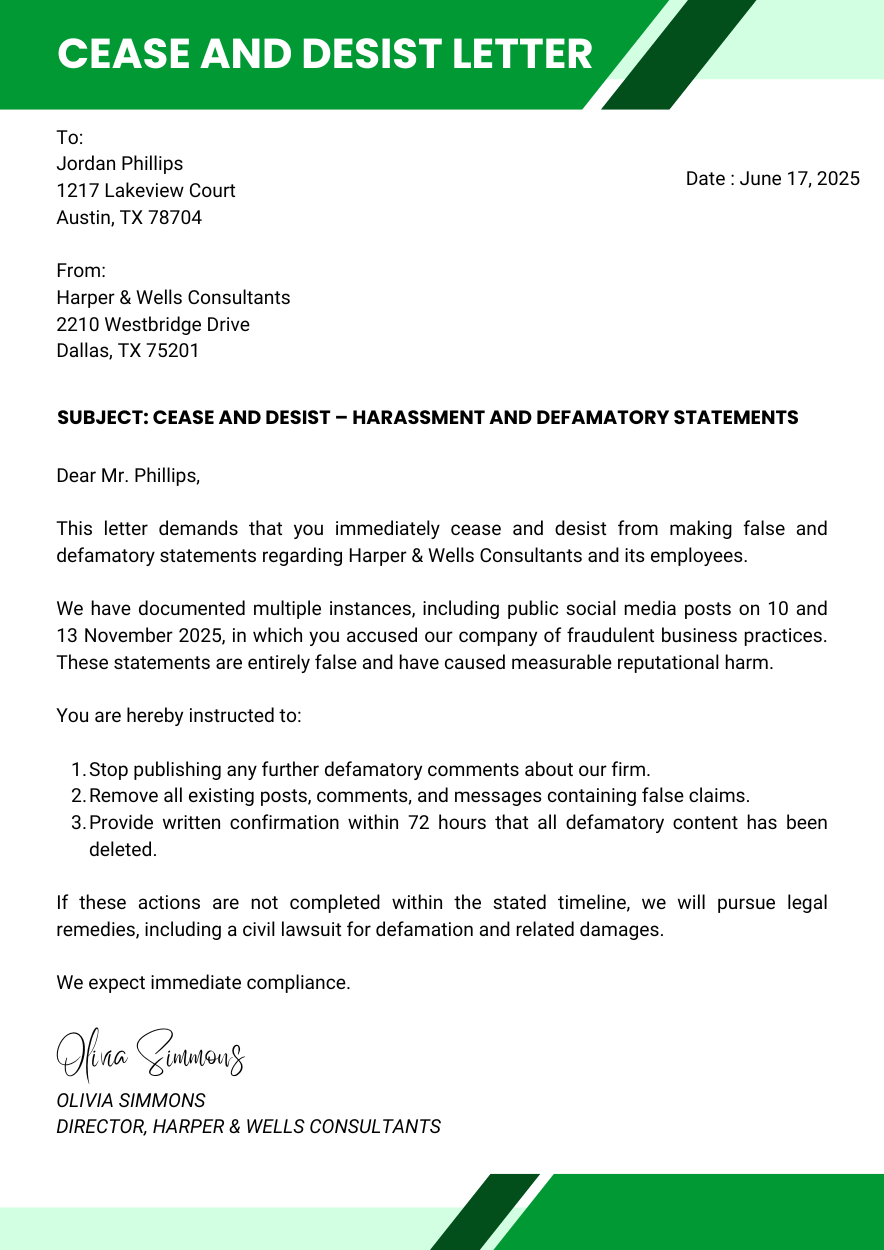
Cease and desist letters address personal disputes involving harassment, stalking, or defamatory statements. If someone is spreading false information that damages your reputation, making threatening communications, or engaging in unwanted contact despite your requests to stop, a formal letter can establish boundaries and document the behavior.
Contract Disputes
When parties violate contractual agreements, cease and desist letters can demand compliance with contract terms. This might involve breaches of non-compete clauses, confidentiality agreements, or other binding obligations that one party is failing to honor.
Debt Collection Violations
Consumers can send cease and desist letters to debt collectors who engage in abusive, deceptive, or harassing collection practices. Under the Fair Debt Collection Practices Act, consumers have the right to demand that collectors stop contacting them.
Key Components of a Cease and Desist Letter
Essential Elements and Format
A properly drafted cease and desist letter should include several critical components:
- Header Information: Your name and contact details, the recipient's name and address, and the date
- Clear Identification: Specific description of the offending activity or behavior
- Legal Basis: Explanation of which laws or rights are being violated
- Evidence: Documentation or description of proof supporting your claims
- Demands: Clear statement of what actions you require the recipient to take
- Deadline: Reasonable timeframe for compliance (typically 10-30 days)
- Consequences: Warning of potential legal action if demands aren't met
- Signature: Your signature or your attorney's signature
Professional Tone and Language
The letter should maintain a professional, objective tone while being firm and direct. Avoid emotional language, threats, or exaggerations that could undermine your credibility. Stick to facts, cite relevant laws when appropriate, and clearly articulate your position without unnecessary hostility.
Types of Cease and Desist Letters
| Type | Purpose | Common Use Cases |
|---|---|---|
| Trademark Infringement | Protect brand identity and prevent consumer confusion | Unauthorized logo use, similar business names, counterfeit products |
| Copyright Infringement | Stop unauthorized reproduction or distribution of creative works | Plagiarism, illegal downloads, unauthorized content sharing |
| Patent Infringement | Prevent unauthorized use of patented inventions | Manufacturing patented products, using patented processes |
| Harassment | End unwanted contact or threatening behavior | Stalking, cyberbullying, threatening communications |
| Defamation | Stop false statements damaging reputation | Libel, slander, false online reviews |
| Breach of Contract | Enforce contractual obligations | Non-compete violations, confidentiality breaches |
| Debt Collection | Stop abusive collection practices | Excessive calls, threats, contacting third parties |
The Legal Power Behind Cease and Desist Letters
Not a Court Order
It's important to understand that a cease and desist letter is not a court order. Recipients are not legally obligated to comply simply because they received the letter. Unlike a restraining order or injunction issued by a court, a cease and desist letter represents a formal request rather than a legal mandate.
Evidentiary Value
Despite lacking immediate legal force, these letters carry significant legal implications. They serve as documented proof that you notified the recipient of the alleged violation and attempted to resolve the matter before litigation. This evidence can strengthen your position in court by demonstrating that you gave fair warning and that the recipient chose to continue their harmful actions with full knowledge of the consequences.
Establishing Willfulness
In many legal contexts, proving that a violation was willful rather than accidental results in higher damages or penalties. A cease and desist letter can help establish willfulness by showing the recipient was aware of your rights and chose to continue infringing upon them after being formally notified.
How to Write an Effective Cease and Desist Letter
Step-by-Step Process
1. Gather Documentation
Before drafting your letter, collect all relevant evidence supporting your claims. This might include:- Photographs or screenshots
- Correspondence or communications
- Contracts or agreements
- Registration certificates (for trademarks or copyrights)
- Witness statements
- Financial records showing damages
2. Research Legal Grounds
Identify the specific laws or rights being violated. Understanding the legal basis for your demands strengthens your position and demonstrates you're prepared to take legal action if necessary. Research relevant statutes, regulations, or case law that support your claim.3. Draft Clear DemandsBe specific about what you want the recipient to do. Vague demands like "stop bothering me" are less effective than precise requests such as "immediately cease using the trademark 'ABC Company' on all marketing materials, websites, and products."4. Set a Reasonable DeadlineGive the recipient adequate time to respond and comply. While urgency is understandable, unreasonably short deadlines may appear aggressive and could be used against you. Typically, 10 to 30 days is considered reasonable depending on the complexity of the demands.5. Outline ConsequencesClearly state what legal actions you're prepared to take if the recipient doesn't comply. This might include filing a lawsuit, seeking injunctive relief, pursuing monetary damages, or reporting the matter to authorities.6. Consider Professional AssistanceFor significant matters, having an attorney draft or review your letter adds credibility and ensures proper legal language. Letters on attorney letterhead often receive more serious attention and signal your willingness to pursue legal action.Receiving a Cease and Desist Letter: What to Do
Don't Panic
Receiving a cease and desist letter can be alarming, but it doesn't necessarily mean you'll face legal consequences. The letter represents a demand, not a judgment. Take time to carefully review the allegations and consider your options before responding.
Steps to Take
- Read Carefully: Understand exactly what behavior is being challenged and what the sender is demanding
- Preserve Evidence: Keep all documentation related to the disputed activity
- Don't Admit Guilt: Avoid making statements that could be used against you later
- Consult an Attorney: Seek legal advice to understand your rights and options
- Evaluate the Claims: Determine whether the allegations have merit
- Consider Your Response: Decide whether to comply, negotiate, or dispute the claims
- Respond Appropriately: If responding, do so professionally and consider having legal counsel draft your reply
Possible Responses
You have several options when responding to a cease and desist letter:
- Full Compliance: If the claims are valid, stopping the activity may be your best option
- Negotiation: Propose alternative solutions or seek licensing arrangements
- Dispute: If you believe the claims are unfounded, you can explain your position
- Ignore: While possible, ignoring the letter may lead to litigation and could be used as evidence against you
- Counter-claim: If the sender is actually the one violating your rights, you might send your own cease and desist letter
Costs and Considerations
DIY vs. Attorney-Drafted
Self-Drafted Letters
Writing your own cease and desist letter costs nothing beyond your time. Templates are widely available online, and for straightforward matters like stopping unwanted contact, a self-drafted letter may be sufficient. However, self-drafted letters may lack legal precision and could contain errors that weaken your position.Attorney-Drafted LettersHaving an attorney draft your cease and desist letter typically costs between $500 and $2,000 depending on the complexity of the matter and your location. Attorney-drafted letters carry more weight because they demonstrate you have legal representation and are serious about pursuing the matter. The lawyer can also ensure proper legal terminology, appropriate tone, and accurate citation of relevant laws.When Professional Help Is Worth It
Consider hiring an attorney to draft your cease and desist letter when:
- The matter involves substantial financial stakes
- Intellectual property rights are at issue
- The legal issues are complex or unclear
- You're dealing with a large corporation or well-resourced opponent
- Previous informal attempts to resolve the issue have failed
- You're seriously considering litigation if the recipient doesn't comply
Limitations and Misconceptions
What Cease and Desist Letters Cannot Do
Cannot Force Compliance
The biggest misconception is that recipients must obey cease and desist letters. Without a court order, there's no legal obligation to comply. The letter is a formal request and warning, not a mandate.Cannot Prevent Free SpeechCease and desist letters cannot be used to silence legitimate criticism, truthful statements, or protected speech. Attempting to suppress protected speech through legal threats could expose you to counter-suits for abuse of process or violations of anti-SLAPP (Strategic Lawsuit Against Public Participation) laws.Cannot Substitute for Legal ProcessFor situations requiring immediate legal intervention, such as ongoing harassment that poses safety risks or ongoing substantial financial harm, a cease and desist letter may be too slow. In these cases, seeking emergency injunctive relief from a court may be necessary.Potential Risks
Sending a cease and desist letter isn't without risk. A poorly drafted letter with unfounded claims could expose you to liability for:
- Defamation (if you make false accusations)
- Harassment (if the letter itself is threatening or abusive)
- Abuse of process (if you're making frivolous legal threats)
- Antitrust violations (in certain business contexts)
Additionally, once you send a cease and desist letter, the recipient may file a declaratory judgment action asking the court to rule on whether their actions are actually unlawful. This could force you into litigation before you're ready.
After Sending a Cease and Desist Letter
Monitoring Compliance
After sending your letter, carefully monitor whether the recipient complies with your demands. Document any continued violations, as this evidence will be crucial if you need to pursue legal action. Keep records of dates, times, and specific instances of ongoing problematic behavior.
Follow-Up Actions
If the recipient complies with your demands, consider whether additional steps are necessary. You might want to:
- Request written confirmation of compliance
- Negotiate a settlement agreement to prevent future violations
- Request removal or destruction of infringing materials
- Seek compensation for damages already incurred
Preparing for Litigation
If the recipient ignores your letter or refuses to comply, you'll need to decide whether to follow through on your threat of legal action. Consider:
- The strength of your legal case
- The potential costs of litigation versus potential recovery
- Whether the recipient has assets that could satisfy a judgment
- Alternative dispute resolution options like mediation or arbitration
- The time and stress involved in a lawsuit
Best Practices for Cease and Desist Letters
Do's
- Keep detailed records of all violations before sending the letter
- Use certified mail with return receipt to prove delivery
- Maintain a professional, businesslike tone throughout
- Be specific about violations and demands
- Include relevant evidence or reference its availability
- Set clear deadlines for compliance
- Keep copies of everything for your records
- Follow up if you don't receive a response
Don'ts
- Make threats you're not prepared to follow through on
- Include false or exaggerated claims
- Use inflammatory or emotional language
- Send letters to multiple parties without considering the implications
- Admit any wrongdoing on your part
- Set unreasonably short deadlines
- Send without proper documentation
- Ignore legal advice if the matter is significant
Cease and Desist vs. Restraining Order
While both legal tools aim to stop unwanted behavior, they differ significantly:
Cease and Desist Letter:- Formal request from one party to another
- No court involvement initially
- No legal obligation to comply
- Costs less and acts faster
- No penalties for non-compliance (until lawsuit is filed)
Restraining Order:
- Court-issued legal order
- Requires filing with a court and often a hearing
- Legally enforceable mandate
- Takes longer and involves court costs
- Violation can result in arrest and criminal penalties
Restraining orders are appropriate for situations involving threats to safety, domestic violence, stalking, or other serious harassment where immediate legal protection is necessary.
Frequently Asked Questions about Cease and Desist Letters
1. What should I do if I receive a cease and desist letter?
Evaluate the claims carefully. Decide if you need legal advice. Ignore it only as a last resort if recommendations indicate the letter lacks merit.2. Can a cease and desist letter lead to court action?Yes, if the recipient fails to comply, the sender may pursue legal action. It's wise to take such letters seriously.3. Is a cease and desist letter legally binding?While not a court order, it can carry weight. Ignoring its contents can lead to further legal issues.4. How can I ensure my cease and desist letter is effective?Include clear facts, legal grounds, and specific requests. Use concise language to avoid misunderstandings.5. Are there risks when sending a cease and desist letter?Sending such letters without sufficient legal basis can lead to counterclaims or accusations of harassment.6. Can I send a cease and desist letter on my own, or do I need a lawyer?You can send one yourself, but consulting a lawyer can strengthen your claims and ensure all legal aspects are covered.Key Takeaways
Cease and desist letters serve as valuable tools for protecting your rights and resolving disputes without immediate litigation. Whether you're sending or receiving one, understanding the legal implications, proper procedures, and realistic expectations is essential. While these letters carry significant weight as formal legal communications, they represent the beginning of a potential legal process rather than an end in themselves.
For straightforward matters, individuals can draft their own letters using available resources and templates. However, for complex issues involving substantial rights or financial stakes, consulting with an attorney ensures your cease and desist letter is properly crafted, legally sound, and strategically positioned for your best possible outcome.Remember that this information is for general educational purposes and does not constitute legal advice. Every situation is unique, and consulting with a qualified attorney in your jurisdiction is the best way to protect your specific rights and interests.


